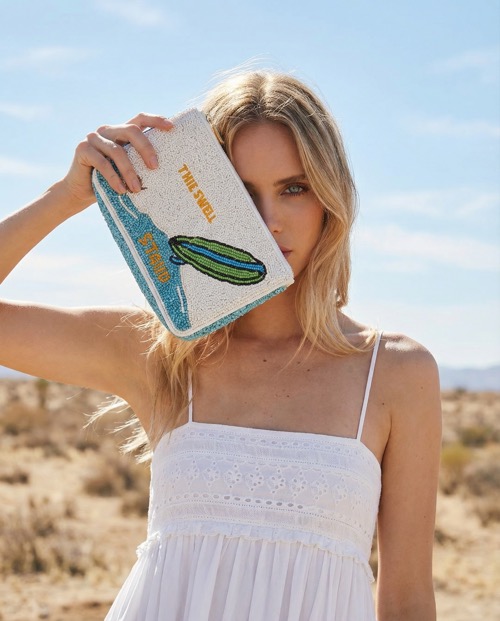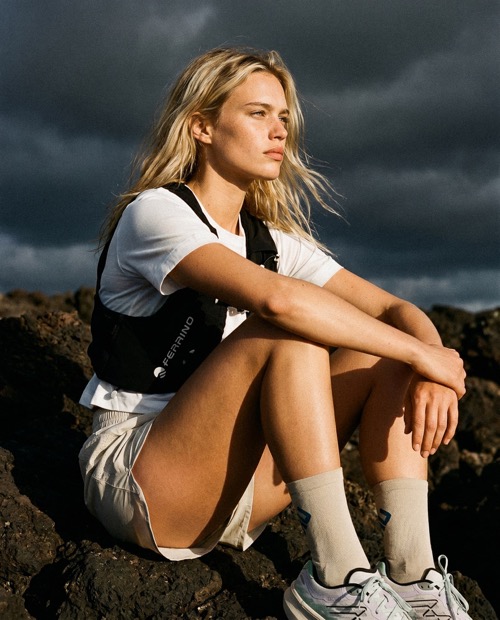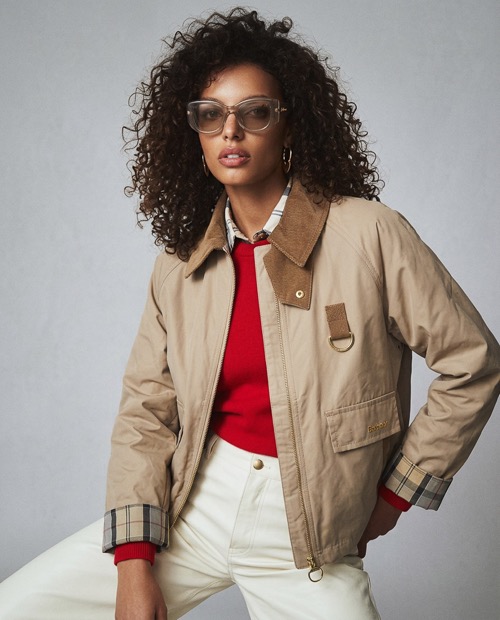
A garment on a model who never existed. A campaign shot on a beach nobody travelled to. A new colourway photographed before the sample was even sewn. A year ago this felt experimental. Today it's how a lot of fashion imagery gets made.
The rules have now caught up. Since 2 August 2026, brands selling in the EU have a legal duty to disclose certain AI-generated images, and for fashion it mostly comes down to one simple question. Is there a realistic person in the picture?
Most brands we talk to aren't sure what applies to them, so we've put together a plain-language guide. It covers what the law actually says, where it's still unclear, what Instagram and TikTok expect, and a simple policy you can put in place this week.
The EU rule everyone is talking about
The rule sits in Article 50 of the EU AI Act, and it has applied since 2 August 2026. You may have read that parts of the AI Act were postponed. That's true, but the delay only covered the high-risk systems, which now kick in during 2027 and 2028. The transparency rules went ahead as planned.
Two parts of Article 50 matter for image production, and they put the responsibility in different places.
The first is about technical marking. The companies behind generative tools have to embed an invisible marker in everything their systems produce. That's their job, not yours, and tools that were already on the market get until 2 December 2026 to comply.
The second is about disclosure, and this one lands on whoever publishes the content. If an image appears on your product page or your Instagram, the duty is yours, even when an external studio made it.
What has to be disclosed is a so-called deepfake. The word makes you think of fake politicians and celebrity scams, but the legal definition is much broader. It covers any AI-generated or manipulated image, video or audio that resembles real people, objects, places or events and could be mistaken for the real thing. A realistic campaign image of a person who doesn't exist can easily fall inside that.
The fines are real too. Breaking the transparency rules can cost up to €15 million or 3% of global annual turnover, whichever is higher. Enforcement is handled nationally, by authorities in each member state.
What needs a label, and what doesn't
Most legal commentators land on the same working rule. If a synthetic person could pass for a real one, you disclose it. If the image only shows a product, even a fully generated one, you generally don't.
In practice, that means a lot of everyday AI work needs no label at all. Retouching or upscaling a real photo doesn't, because nothing is being passed off as something it isn't. Placing a real product on an AI-generated background usually doesn't either, since there's no person or event involved and the product itself is shown accurately. The same goes for AI-generated packshots and still lifes, and for imagery that is clearly stylised or illustrated, since nobody is likely to mistake it for a photograph.
It changes as soon as realistic people enter the frame. A real product worn by an AI-generated model is the clearest example, because someone who doesn't exist is being shown as if they were photographed. Campaign and lifestyle scenes with realistic people and settings fall in the same category.
Then there's the case that needs the most care, which is an image that resembles a real, identifiable person. Here a label is only half the story. Disclosure solves transparency, but it doesn't solve rights. If a generated face looks like an actual model or a public figure, writing "AI-generated" in the caption doesn't make that likeness yours to use. You need their consent.
The Act also has a lighter regime for work that is evidently artistic, creative, satirical or fictional. In those cases you can disclose in a way that doesn't spoil the work. A product page is unlikely to qualify, but a clearly conceptual campaign might.
The grey zone
Honestly, nobody knows yet whether a product image on a synthetic model counts as a deepfake. Some of Europe's largest online retailers argue that commercial product imagery falls outside the definition entirely. There's no court ruling to settle it, and national authorities have barely started enforcing.
The European Commission published guidelines on Article 50 in July 2026, along with a voluntary Code of Practice on AI-generated content in June. Both are worth a read, but neither gives fashion e-commerce a definitive answer.
Our view is that the cautious path costs very little and takes the risk off the table. Waiting for case law means betting your brand's reputation on someone else's test case.
There's also a rule that applies no matter how the AI Act debate ends. Consumer protection law, which in Sweden means the Marketing Act, already forbids misleading product images. If an image changes how a garment fits, shifts a colour or a wash, or adds details the product doesn't have, it can be unlawful with or without a label. A label never fixes an inaccurate image. Accuracy is the real obligation.
Outside the EU
The EU rule follows your customers, not your head office. A Swedish brand selling into Germany, France or the Netherlands is covered in all of them, and so is an American brand selling into Europe.
The United States has no federal rule, but individual states are moving. New York's synthetic performer law has applied since 9 June 2026, and it requires advertisers who knowingly use a synthetic human in an ad to say so clearly. A first violation costs $1,000 and every one after that $5,000. Product-only images aren't covered. New York's Fashion Workers Act adds another layer, since it requires a real model's written consent before anyone creates or uses an AI replica of them.
Most other countries don't yet have a specific labelling law for commercial imagery, but rules against misleading advertising apply almost everywhere. If you sell through distributors or marketplaces, check their content policies as well, because they often go further than the law does.
Since most brands sell across borders anyway, building to the EU standard is the simplest way to be covered in most places at once.
On social media
On social, the platforms have their own rules on top of the law, and they're often stricter. They all ask roughly the same question, which is whether the content shows realistic people, places or events that someone could take for real.
TikTok is the strictest of them. Realistic AI content showing people has to be labelled with the built-in AI-generated setting when you post, and a note in the caption doesn't count. Ads and branded content follow the same rules, and skipping the label can get a post removed and your account a strike from the very first time.
Instagram and Facebook expect you to disclose realistic AI content as well. Meta also adds an "AI info" label on its own when it detects the right metadata in a file, and ads without proper disclosure are increasingly being rejected.
YouTube asks you to tick the AI disclosure in YouTube Studio for realistic content that is generated or significantly altered. Leave it out and you risk labels being added for you, videos being removed and problems with monetisation.
The thing that catches most brands off guard is automatic detection. Images from the major generative tools increasingly carry provenance data known as Content Credentials. Platforms read it and label your post whether you chose to or not, and once the EU marking requirement is fully in place in December, that data becomes standard. It's better to plan for it than to be surprised by it.
A simple policy you can adopt this week
You don't need a legal department to get this right. Five decisions cover almost all of it.
- Label images with realistic generated people. On a product page, a short and consistent line close to the image gallery does the job, something like "Imagery created with AI". In a campaign, it can sit in the credits or the caption. What matters is that people see it the first time they see the image, not buried in a policy page.
- Leave the rest unlabelled. Product-only images, AI backgrounds and retouching don't need it. Labelling everything teaches customers to distrust everything, including your real photography.
- Use the platforms' own settings. On TikTok, Instagram and YouTube, the built-in AI toggle is what counts. A line in the caption is fine as an extra, never as a replacement.
- Treat accuracy as non-negotiable. Every generated image has to show the real product, with the right fit, colour, wash, material and details. Build from your own garments and product shots, never from someone else's photography.
- Clear the rights. Don't use a generated face that resembles a real person without their consent. Your contract with any studio should say who owns the images and confirm they aren't built on third-party photos.
Write these five points down on a single page, share it with your e-commerce and social teams, and hold every supplier to it. That's most of the compliance work done.
How we work at Aavi
For us, transparency is part of how we produce, not something added at the end. Every production starts from the client's own products and a written brief, never from someone else's photographs. That keeps the product accurate, which is what consumer law really asks for, and it keeps the work original.
We help clients decide on their labelling at the start of a production, channel by channel, so nobody has to go back and add labels across a live catalogue. And we're straightforward about which images need disclosure and which don't.
The way we see it, a label doesn't make good imagery any weaker. What weakens it is imagery that misrepresents the product. Directed, not generated.
This article reflects the rules as of October 2026 and is general information, not legal advice. How Article 50 applies to commercial imagery is still developing, so for decisions specific to your business, speak to a lawyer.
Sources
- Article 50 transparency obligations and the 2 August 2026 deadline (Praxikon)
- Guidelines on the transparency obligations under Article 50 (European Commission)
- Code of Practice on Transparency of AI-Generated Content (European Commission)
- Regulation (EU) 2026/1744, the Digital Omnibus on AI (EUR-Lex)
- EU AI Act for ecommerce and deepfake images (Lawwwing)
- AI fashion models and disclosure laws in 2026 (Craftshift)
- How to label AI content on TikTok (Storrito)